
Program Overview
Chemical Physics
Explore the intersection of chemistry and physics through an interdisciplinary major that prepares you to investigate complex scientific questions using mathematics, experimentation, and advanced scientific theory.


Interdisciplinary Science
Study chemistry, physics, and mathematics in an integrated program.

Faculty-Mentored Research
Complete an original Independent Study project with close faculty guidance.

Flexible Scientific Focus
Build a strong foundation before concentrating your advanced coursework in chemistry or physics.
Study science without disciplinary boundaries.
Chemical Physics combines the strengths of Wooster's Chemistry and Physics departments, allowing students to approach scientific problems from multiple perspectives.
Students benefit from:
.svg)
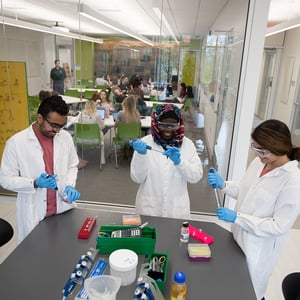
Small laboratory and classroom experiences
Close collaboration with faculty mentors
A rigorous interdisciplinary curriculum
Extensive preparation in mathematics, chemistry, and physics
Opportunities for undergraduate research through Independent Study
Rather than specializing immediately in a single discipline, students develop a broad scientific foundation before pursuing advanced coursework aligned with their interests.
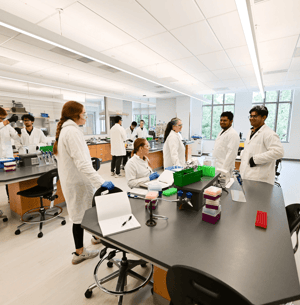

Build expertise across chemistry and physics.
The Chemical Physics major includes a strong foundation in mathematics, chemistry, and physics before allowing students to customize their upper-level coursework.
Students complete introductory sequences in all three disciplines and then choose to emphasize either Chemistry or Physicswhile continuing advanced study in the complementary field. This flexible structure prepares graduates for careers and graduate study that require expertise across traditional disciplinary boundaries.
Because the curriculum is intentionally interdisciplinary, students may not double major in Chemical Physics and Chemistry, Physics, or Mathematics. Students planning to pursue graduate study in chemistry or physics are encouraged to work closely with faculty advisors to select additional advanced coursework that supports their goals.
Like every Wooster student, Chemical Physics majors complete a faculty-mentored Independent Study, conducting original research that develops the critical thinking, laboratory, and scientific communication skills expected of practicing scientists.

Ready to Explore Where Chemistry Meets Physics?
Whether you hope to pursue graduate study, scientific research, or an interdisciplinary career in the physical sciences, Chemical Physics provides the broad scientific foundation and research experience to help you succeed.
Career Opportunities
The interdisciplinary nature of Chemical Physics prepares graduates for a wide variety of scientific and technical careers.
Graduates may pursue opportunities in:
Scientific research
Materials science
Physical chemistry
Chemical analysis
Laboratory science
Energy and environmental science
Graduate study in chemistry or physics
Research and development
The program also provides an excellent foundation for advanced study in chemistry, physics, materials science, and related scientific disciplines.