

Program Overview
Environmental Studies
Study the complex relationship between people and the environment while preparing to create sustainable solutions through science, policy, and the liberal arts.
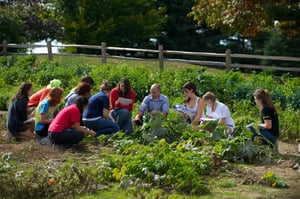

Learning in the Landscape
Study environmental issues using the campus garden, the Abbey Arboretum, and regional research partnerships as living laboratories.

Interdisciplinary by Nature
Combine science, policy, economics, psychology, communication, and the humanities to understand environmental challenges.

Hands-On Experience
Participate in research, sustainability initiatives, internships, and community-based learning.
Why study Environmental Studies at Wooster?
.svg)
Explore environmental issues through an interdisciplinary liberal arts curriculum.
Begin research early through close faculty mentorship and hands-on laboratory and field experiences.
Customize your education through one of four pathways that align with your interests and career goals.
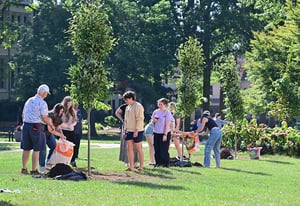
Learn on a campus recognized as a Tree Campus USA and accredited as the Abbey Arboretum, which provides opportunities to study ecology, biodiversity, and environmental stewardship firsthand.
Participate in internships, faculty research, sustainability initiatives, and community partnerships.
Connect with researchers and facilities at the Ohio Agricultural Research and Development Center (OARDC).
Complete an original Independent Study project under the guidance of a faculty mentor.
Academic Opportunities

Environmental Humanities
Explore how literature, philosophy, history, and the arts shape our understanding of the natural world.
Environment and Society
Study the relationships among environmental policy, economics, politics, psychology, and communities.

Environmental Conservation
Examine ecological systems, biodiversity, conservation science, and the management of natural resources.

Sustainable Food Systems
Investigate food production, agriculture, sustainability, and the social and environmental systems that support healthy communities.
Throughout the major, students study environmental science alongside economics, communication, psychology, humanities, and other scientific disciplines before completing Independent Study.
Students interested in complementing another major may also pursue an Environmental Studies Minor, which provides an interdisciplinary understanding of environmental issues while allowing students to deepen expertise in their primary field of study.

Ready to Make an Impact?
Whether you're interested in conservation, sustainability, environmental policy, food systems, climate research, or community engagement, Environmental Studies prepares you to understand complex challenges and create meaningful solutions.
Career Opportunities
Environmental Studies graduates pursue careers and graduate study in areas such as:
- Environmental conservation
- Sustainability
- Environmental policy
- Natural resource management
- Environmental education
- Agriculture and food systems
- Community development
- Research
- Government
- Nonprofit organizations
Many students also build professional experience through internships, faculty research, and community partnerships before graduation.


Matthew Mariola
Professor of Environmental Studies (On leave 2026-2027)
mmariola@wooster.edu

Susan Clayton
Chair of Environmental Studies
sclayton@wooster.edu
Jennifer Ison
Associate Professor of Biology
jison@wooster.edu

Erum Haider
Assistant Professor of Political Science; Environmental Studies; South Asian Studies
ehaider@wooster.edu