

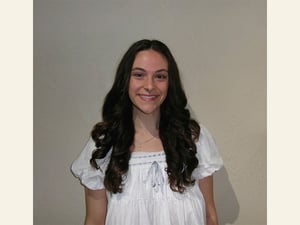
When political science and mathematics major Kiara Joyce ’27 joined The College of Wooster’s Sophomore Research Program, she was drawn by the chance to contribute to a project documenting the killings of human rights defenders around the world. Initially, Joyce’s task was to collect data in a spreadsheet. But just a year later, Joyce co-authored "The Human Rights Defenders Targeted Killings (HRD-TK) Dataset,” an article published in the January 2026 issue of the Journal of Human Rights.
“It was quite exciting,” Joyce recalled. “I had the opportunity to do a deep dive on political violence, something I’m interested in.” Joyce was guided by faculty advisor Matt Krain, professor of political science and global & international studies at Wooster who created the public database in 2020 with the goal of building a reliable information source for scholars, policymakers, and advocates. The dataset currently records 3,566 reported killings of human rights activists between 2014 and 2025.
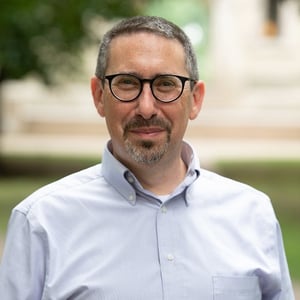 Krain has studied political violence for more than 30 years, but some of the patterns revealed by the HRD-TK still surprise him. “I expected the killings to be a much more geographically widespread phenomenon,” he said. Instead, the data points to clear hotspots, including Colombia, Mexico, and the Philippines; in some years, Colombia alone accounts for a quarter to a third of the killings. Krain noted that the findings raise questions and suggest reasons for the uptick in killings that began in 2014: the rise likely resulted from “a movement toward a rollback in democracy,” Krain said, adding that restricted protests, nongovernmental organizations, and the media make the advocates’ work more dangerous and necessary. By contrast, he noted, defenders in democratic or partially-democratic states tend to be targeted “not by national governments but by local corrupt leaders and violent nonstate actors” — such as insurgents, guerrilla groups, cartels, and militias.
Students develop workforce-ready skills through research experience
Over the years, Krain has worked with ten students on the HRD-TK, all with various majors. Abigail Beard ’23, the project’s first research assistant, coauthored the first article based on the dataset. Since then, James Carter ’26, Nemsie Gonzalez ’26, Anousha Datta ’27, Ollie Regan ’27, Eilidh Horn ’28, Ella McCabe ’29, and Sohail Zulfiqar ’29 have collaborated too, along with Claire Kim, a high school student from Georgia who worked on the project remotely. This past September, Horn, Zulfiqar, and McCabe presented a poster on the HRD-TK at Wooster’s Experiential Learning Showcase this fall.
“This project is not possible without student work,” Krain reflected. He appreciates his students for testing the reliability of the database’s coding and suggesting how to improve the dataset. For instance, Joyce noticed during her readings of cases that many perpetrators went unconfirmed because police investigations were incomplete, despite communities drawing conclusions about who was responsible. So she helped add an “alleged perpetrator” category alongside the “confirmed perpetrator” column and recoded the data. “That gave us some really good new insights,” Krain said.
In addition to improving the research, the students learn critical thinking, analysis, and data collection and management. By turning historical documents or advocacy reports into information that can yield insights among scholars and advocates, Krain said, his research assistants develop “skills they can take into the workforce, regardless of what they do.”
Joyce agreed. For the article, she taught herself how to make maps, graphs, and tables from Excel data, getting to learn R — the statistical computing, data analysis, and graphical visualization software — along the way. “I thought those visual components would help readers to be able to digest the material, but I also selfishly wanted to learn how to do all those things,” she said with a laugh.
A foundation for future student research
The dataset is also now anchoring Joyce’s Independent Study on the killings of social activists in Colombia. Her I.S. explores patterns in the timing, perpetrators, and methods of the killings of human rights defenders, with particular attention to election cycles and the 2016 peace agreement.. She is currently learning ArcGIS to map cases more precisely. “I’m excited to see how much statistically significant data I can pull from that,” she added.
The HRD-TK project involves challenges, such as reading articles that, unlike in U.S. media, include uncensored photographs of the deceased. “The most difficult thing wasn’t the coding or the writing,” Joyce shared. “It was the mental strain of looking at death after death.” That’s why Krain limits students’ time with the project and checks in weekly with his research assistants. “We talk through how difficult this kind of work is and how it sort of reduces your faith in humanity,” Krain said. They also try to recall the purpose of the research, which is ultimately to support human rights defenders — and that “can potentially be life affirming,” he said.
That potential has been fulfilled in seeing the real-world impacts of their research, which both Joyce and Krain say is one of its greatest rewards. Last spring, law students working with the University of Dayton’s law clinic requested that Krain’s team help support an asylum case for an Indigenous Ecuadorian human rights defender. Krain and his Wooster researchers compiled a report showing the defender’s high risk of being killed if he returned to his home country. The clinic’s lawyers turned the report into a legal affidavit to support the activist’s asylum petition; his case is still pending. The Dayton team will also be using the database in future asylum cases for human rights defenders.
Krain is delighted that the HRD-TK could have such a valuable use. “Normally, folks who study political violence don’t see their research translated into something good happening to other people, so this is exciting,” he said. “Even if it’s helping just one person, that’s huge.”
For Joyce, the dataset’s role in the asylum case confirmed that the research could drive meaningful change. “And that’s what I want to continue to do,” she said. She hopes that her I.S. will also be used to help human rights defenders and social activists.
Krain’s database continues to generate new publications. Most recently, he coauthored “Targeted Killings of Information Workers: Causes, Patterns, and Consequences,” which was published in October in a special forum of International Studies Perspectives that includes contributions from top scholars as well as activists. He sees the human rights killings database as a service and plans to keep updating it indefinitely, with the help of Wooster research assistants.
“One of the things I love about the Sophomore Research Program is that it gives students a meaningful mentored undergraduate research experience early in their careers,” Krain said. “They see their work yield knowledge or other positive outcomes, and they develop critical skills that will serve them in I.S. and beyond.”
Featured image of Kiara Joyce ’27, political science and mathematics major provided by the subject.