
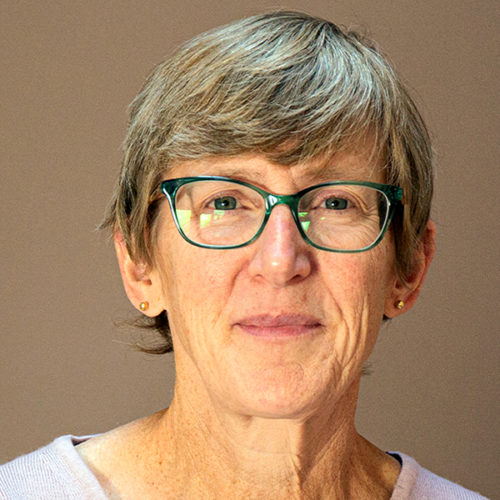
Susan Clayton
Pronouns: She/Her/Hers
Whitmore-Williams Professor of Psychology
Phone: 330-263-2565
Office: Morgan 107
Website: Visit Website
Degrees
- B.A., Carleton College 1982
- M.S., Yale University 1984
- Ph.D., Yale University 1987
A Climate Discussion with Dr. Susan Clayton
I consider myself to be a conservation psychologist: interested in understanding and promoting a healthy relationship between humans and nature. Harm to nature can result in harm to humans, and my research explores the implications of climate change for psychological wellbeing, including climate anxiety. I also examine positive impacts of nature; for example, I have worked with zoos, where a wide and diverse range of people come to interact with wild animals and may learn about nature and about conservation needs during their visit. Underlying all these research topics is my interest, as a social psychologist, in the social processes that promote environmental concern and environmental identity. I also maintain a strong interest in the psychology of justice: how people define what is fair and how they respond to perceived injustice. Environmental challenges present an important context for examples of justice and injustice, from the intergenerational injustice of climate change to questions of whether people have the right to a healthy environment.
- PSYC 225: Environmental Psychology
- PSYC 330: Social Psychology
- PSYC 350: Psychology of Justice
- PSYC 399: Self and Identity
- ENVS 300: Sustainability
- Ellis, E., Malhi, Y., Ritchie, H., Montana, J., Diaz, S., Obura, D., Clayton, S…. et al. (2025). An aspirational approach to planetary futures. Nature. https://doi.org/10.1038/s41586-025-09080-1
- Clayton, S., & Crandon, T. (2025). Climate change and mental health. Annual Review of Clinical Psychology, 21,https://doi.org/10.1146/annurev-clinpsy-081423-025932
- Schor, M., Clayton, S., Cardoso, M., Fernandes, M., Frota, M., & Surkan, P. (2024). “I am really scared for the future”: Climate distress among Brazilian youth. Environmental Education Research. https://doi.org/10.1080/13504622.2024.2409946
- Lewandowski, R. E., Clayton, S., Olbrich, L., Sakshaug, J., …. & van Susteren, L. (2024). Climate emotions, thoughts, and plans among US adolescents and young adults: A cross-sectional descriptive survey and analysis by political party identification and self-reported exposure to severe weather events. Lancet Planetary Health. https://doi.org/10.1016/S2542-5196(24)00229-8
- Ogunbode, C., et al. (2024). Climate justice beliefs related to climate action and policy support around the world. Nature Climate Change. https://www.nature.com/articles/s41558-024-02168-y
- Clayton, S., & Brown, L. (2024). Climate change and mental health. Journal of the American Medical Association. https://doi:10.1001/jama.2024.1839
- Clayton, S. (2024). A social psychology of climate change: Progress and promise. British Journal of Social Psychology(landmark paper), 63 (4), 1535-1546. DOI: 10.1111/bjso.12749
- Clayton, S., & Czellar, S. (2023). Environmental identity as a motivator of pro-environmental behaviour. In B. Gatersleben & N. Murtagh (Eds.), Handbook on Pro-Environmental Behaviour Change, 226-238. Edward Elgar Publishing.
- Tam, K.-P., Chan, H.-W., & Clayton, S. (2023). Climate change anxiety in China, India, Japan, and the United States. Journal of Environmental Psychology, 87, 101991.
- Clayton, S. (2023). A new word for a new feeling. In P. Bogard (Ed.), Solastalgia. University of Virginia Press.
- Clayton was a lead author on the 6th assessment report from the Intergovernmental Panel on Climate Change
- Clayton is a Fellow of the American Psychological Association, the Society for Environmental, Population and Conservation Psychology, the Society for Personality and Social Psychology and the Society for the Psychological Study of Social Issues. She is a member of the International Association of Applied Psychology.
- She is currently on the editorial boards for Journal of Environmental Psychology, Environmental Research: Health, and OneEarth.
- She is a member of the Scientific Council for the Institut du développement durable et des relations internationals (IDDRI).