
Chemistry alumna directs drug regulation at Pfizer during unprecedented pandemic
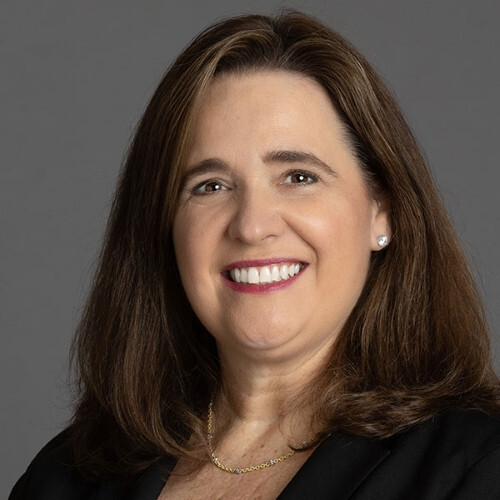
Before you trust a drug to treat your symptoms or illness, the pharmaceutical process the medication completes includes steps in research, development (including nonclinical and clinical trials), and regulatory review to ensure effectiveness and patient safety. From the first discovery of a chemical or biological candidate in a lab, to patient trials, to development and scale up of a manufacturing process, to global regulators’ review, to preparing the medical communications for doctors, and patients, Lisa Skeens ’88, recently retired vice president of global regulatory affairs at Pfizer, oversaw the entire process for medications in a large portfolio of pharmaceuticals. When a pandemic causing infectious disease, hospital overflow, and death emerged in 2020, she collaborated with regulators in countries around the world to accelerate that process in unprecedented ways that would disrupt the devastation caused by COVID-19.
Though medications go through each step in the pharmaceutical life cycle, the elements that ensure the success of the process intertwine, requiring collaboration between scientists, clinical researchers, manufacturing experts, commercial leaders, and government regulators. Creating a culture of collaboration for teams of up to 900 people across four continents came naturally to Skeens after being exposed to the environment at The College of Wooster.
“I very much appreciated the collaboration at Wooster, and that was one of the keys to my success in the pharmaceutical industry,” she said, referencing the school’s commitment to teamwork on research projects, among faculty, and across offices and departments. Her Independent Study, while turned in as her own project in synthetic organic chemistry, became a part of an article published in a scientific journal with two other chemistry majors and her professor, Paul Gaus. Aside from an edge as a published undergraduate researcher while a Ph.D. candidate at Northwestern University, the experience with I.S. added to the tools she used as a leader throughout her career. “My job was a mix of scientific skills and strong writing and critical thinking to communicate effectively with people. Wooster taught me that well. No matter what the challenges were, I was always up for it,” she said.
“Being able to communicate extremely well was vital to being a successful leader,” Skeens added. “Leaders also have to be constantly learning and developing their people.” As the liaison between the scientists at Pfizer and scientists and regulators at the Food and Drug Administration and international regulators, she constantly gained expertise in new areas of science and healthcare as her team wrote and developed materials to evaluate, demonstrate effectiveness, and communicate the safety of new medications. “Wooster prepared me to take on new challenges and learn new things, and that was critical throughout my career,” she said. “I developed an eagerness and capability to broaden my understanding in not just pharmaceutical development from the chemistry perspective, but clinical trial design and execution, immunology, manufacturing, regulation and compliance, and understanding marketing and promotion.”
Managing the life cycle of drugs with regulators around the world required a vested interest in global affairs—an “excitement and fascination” Skeens first discovered at Wooster, meeting students from around the world through involvement in Scot Band, service houses, Epsilon Kappa Omicron, and other student organizations. “After graduating, I always sought out opportunities where I could have global roles,” she said. “In addition to the FDA, my team and I worked with regulators from more than 200 countries.”
With a focus on health and bringing lifesaving drugs to patients, Skeens, whose roles in regulatory affairs included global VP positions at Baxter Healthcare and Hospira, Inc. before Pfizer, appreciated the way her work impacted patients all over the world. “Everything we did was for the patients, and that’s a very rewarding place to be,” she said. From medications in oncology, vaccines, antibiotics, therapeutics, and medical devices, her career helped address medical needs in emerging and developed markets. One of her greatest accomplishments in her career included shaping regulatory requirements for biosimilar drugs, those manufactured from natural, living sources and working similarly to approved drugs that may be more expensive.
When the pandemic created a need for treatments and medications to help stop the spread of a disease killing millions, Skeens relied on her relationships to partner and negotiate with regulators in countries around the world. “We had to accelerate the development cycle in ways that nobody thought possible,” she said. “It typically takes years, but this time, we were talking with regulators in real time, sharing data as soon as we could. I literally was on the call with the FDA the same day as data came in to talk with them and share the information.” Responsible for the full regulation process for the Paxlovid antiviral treatment, Skeens said she and her team “really felt we were making a difference in the world.”
This feature originally appeared in the Spring 2025 issue of Wooster magazine.
Photo provided by Skeens.
Posted in Alumni, Magazine on March 13, 2025.
Related Posts


Related Areas of Study
Public Health
Explore the many options and paths for those who want to be part of the world of health care
PathwayChemistry
Access to labs, research opportunities, and small classes give chemistry majors lots of options after graduation.
Major MinorBiochemistry & Molecular Biology
Biology and Chemistry combine in an interdisciplinary program for students with a passion for molecular events.
Major