

Faculty apply new AI-conscious tactics in the classroom
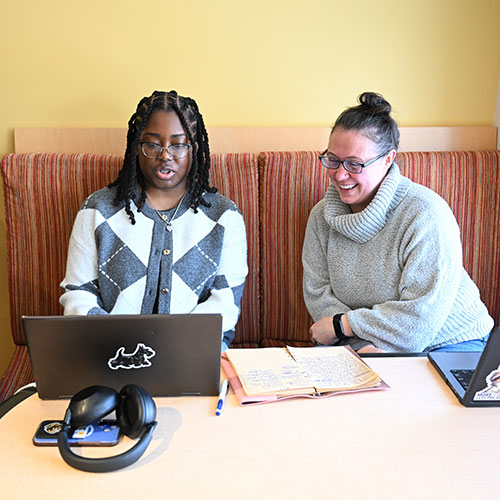
Wooster’s Information Technology team organized a Professional Learning Community in fall 2024 to explore sample lessons and classroom activities using generative AI access to ChatGPT Plus and MagicSchool (an AI platform for educators). Two participants share how they’ve been able to incorporate tactics using the technology in their classrooms to add to students’
understanding and readiness.
Writing Center Director Alicia Brazeau feels pulled in two directions when it comes to AI. “I have deep concerns about what it means for writers, but at the same time, this is clearly a tool students are using and need to be literate in,” she said. That’s why in her First-Year Seminar course, Brazeau communicates clear policies for each assignment, so students know where AI use is appropriate and where it’s undermining learning.
The first-year students explore different ways to enhance study habits using AI. Primarily, Brazeau models how to effectively prompt AI, and the class evaluates AI outputs like feedback on essays and outlines. For added insight, she surveys each class about their experience and preferences around AI. Based on their level of enthusiasm toward the technology, Brazeau might include more of it throughout the semester. However, she’s been surprised to learn that even first-year students worry about AI taking away their voice.
Brazeau also builds in required drafts to assignments to push down the panic of a completed paper. To increase emphasis on the writing process, students also need peer review from the Writing Center. Brazeau’s consultants have been trained on using AI for feedback on writing and can use it when assignments allow it.
On the opposite end of the spectrum, Peter Abramo, director of Entrepreneurship, is using the technology in different ways in every class he teaches. “I’m not focusing on what it replaces, but what it adds to our work,” said Abramo.
Students collaborated with Abramo using ChatGPT to create EntrepreBot, an AI tutor that provides International Entrepreneurship students who didn’t previously take Abramo’s Introduction to Entrepreneurship course with access to material they may need. The bot used data, files, and links from Abramo, giving him control over content and eliminating the need for multiple requests for information.
ChatGPT also serves as a presentation coach by guiding students on presentation structure and content principles based on what they learned in class. Using the voice option, students verbally deliver their presentation for the AI tool to react to rather than a text file. ChatGPT takes on multiple personas to help better prepare the students for the specific audience they need. They might prompt it to act as an investor listening to their new venture pitch to get financial questions or opt for professor-related feedback to receive more business model and strategy questions. It prepares students by asking questions they might not think of on their own and offers feedback they can use to improve clarity, engagement, and persuasion.
Abramo made clear that AI saves him and the students time, but he emphasized that people still need a core knowledge base before they can use the tool and really maximize it. “The students are comfortable using AI, but they don’t really have the independent understanding of how to effectively leverage it to enhance the class learning objectives,” said Abramo. “They play around in it, but probably not in the most
strategic way. However, they’re very open to learning and finding out ways to incorporate it.”
Featured image: Wooster writing consultants now train on using AI for feedback on writing and further using it as a tool when assignments allow it.
This story originally appeared in the spring 2026 issue of Wooster magazine.
Posted in Magazine, News on March 9, 2026.