Overview

What kinds of jobs are available to graduates with degrees in speech-language pathology and audiology?

Graduates of the Communication Sciences & Disorders program at The College of Wooster have a solid understanding of human speech, language, and hearing, and have practical experience from the four semesters they spend working in the college’s Freedlander Speech and Hearing Clinic, an outpatient clinic for community members with speech, language, or hearing disorders. Many graduates go on to graduate  programs to earn a master’s in speech-language pathology or a doctor of audiology degree, Au.D., while other graduates choose careers in education, social work, law, medicine, nursing and more.

Communication Sciences & Disorders at The College of Wooster

Students who want to enter the fields of audiology or speech-language pathology will benefit from the student-led research, courses taught by experts in the field, and access to internships and practicums at The College of Wooster. Each student at The College of Wooster completes an independent study under the guidance of a faculty mentor, and students in Communication Sciences and Disorders spend the two semesters of their senior year working on a major investigative project. The program is available as a major or a minor, and the multidisciplinary nature of Wooster’s courses allows many students to double major or explore other disciplines.

History of the Department

The Department of Communication has had a long and distinguished history at The College of Wooster. Louis Holden, the College’s president from 1899-1915, who himself had been a professor of oratory at Beloit College before assuming presidency at Wooster, founded the Department of Oratory at the College in 1900.

The Department of Communication did not firmly establish itself until 1908, with the arrival of Professor Delbert Lean. Lean had studied public speaking at Emerson School of Oratory (today known as Emerson University) and argumentation at Harvard. Under his leadership and that of President Charles Frederick Wishart, who was president from 1919-1944, the major in speech was created in 1930.

In the Fall of 2020, The Department of Communication which included both Communication Sciences & Disorders and Communication Studies have become their own separate departments, creating the Department of Communication Sciences & Disorders and the Department of Communication Studies.

Today, both departments reside in Wishart Hall, named after President Wishart, described in the building’s plaque of dedication as “Master of the Spoken Word.” Wishart eloquently defended Wooster’s decision to teach evolution against attacks by William Jennings Bryan in 1922, three years prior to the famous Scopes trial. Wishart Hall was erected in 1966, with much of the building funds coming from the citizens of Wooster and Wayne County, a tribute to the Department’s ties with the surrounding area.

Faculty & Staff

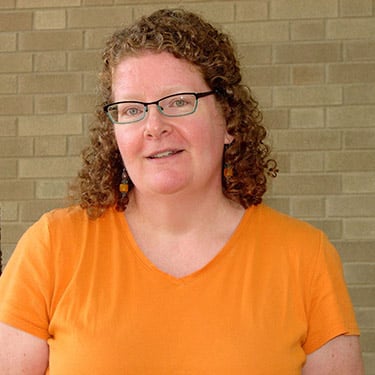
Joan Furey

Joan E. Furey

Associate Professor and Department Chair of Communication Sciences & Disorders

jfurey@wooster.edu

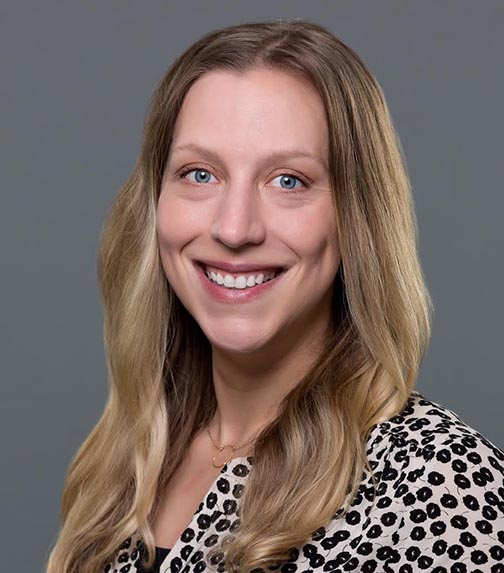
Cara Hammond

Cara Hammond

Clinical Supervisor in Communication Sciences & Disorders

chammond@wooster.edu

Head shot of Scott Schwarzwalder

Scott Schwarzwalder

Wishart Administrative Coordinator

sschwarzwldr@wooster.edu

Latest News

Sarah Wilds '97

Communication sciences and disorders alumna takes an unexpected journey from intern to CEO

When Sarah Wilds ’97 called the Prentke Romich Company (PRC) in the summer of 1995 to inquire about internship opportunities, she set in motion […]

Ollie Bream head shot

Ollie Bream ’25 receives NCAA Postgraduate Scholarship

Make it 18 selections since 2018 for The College of Wooster, which was recently notified swimming and diving All-American Ollie Bream will be receiving the prestigious […]

David Roney '21

Psychology and communication sciences and disorders major takes multidisciplinary approach as speech-language pathologist to help clients with communication disorders

As a member of the men’s golf team at The College of Wooster, David Roney ’21 served as the team’s anchor and received two […]

Stacey Lim ’01

Stacey Lim ’01 has been breaking sound barriers throughout her life

Stacey Lim ’01 never let being born profoundly deaf get in the way of living a full life. The 2001 communication sciences and disorders […]

Major

The major requires eleven courses in the department, including Introduction to Communication Sciences and Disorders, Phonetic Transcription and Phonology, Language Development in Children, Audiology, Auditory Rehabilitation, and Anatomy and Physiology of the Speech Mechanism, and two electives from within the department or in related disciplines.

View Courses

Minor

A minor in Communication Sciences and Disorders requires six courses in the department, including Introduction to Communication Sciences and Disorders, Phonetic Transcription and Phonology, Language Development in Children, and Audiology.

View Courses

Independent Study

Communication Sciences and Disorders I.S. Handbook

At Wooster, Independent Study (I.S.) provides all students the opportunity to engage in an activity both personally meaningful and appropriate to their individual fields and interests. Students work closely with their faculty advisors through regularly scheduled conferences and seminars that are designed to assist, encourage, and challenge the participants and to afford both students and advisors an opportunity to share the excitement of discovery and expression in areas of mutual interest.

Search the I.S. Database

Student Year I.S. Title Major 1 Major 2 Advisor
Please search to view results
Azad presented her research to members of the College community at the Senior Research Symposium.

Communication sciences and disorders major explores alternative approaches to support patients

Aspiring speech-language pathologist Sabrina Azad ’24 wanted to focus her Independent Study research on understanding how to support patients with brain diseases that can […]

Round yellow button featuring a white illustration of a campus building with black text reading "I DID IT! THE COLLEGE OF WOOSTER"—given to students upon submitting their Independent Study.

Together Everyone Achieves More (T.E.A.M.): An Investigation of Recreational Sports Teams’ Coaches’ Knowledge of Best Practices for Working with Adolescents with Autism Spectrum Disorder

Name: Abigail Johnson Major: Communication Sciences and Disorders and Education Advisor: Donald M. Goldberg, Ph.D. This study investigated community recreation sports teams’ coaches’ knowledge regarding working with […]

head shot for Mia Chen

An Investigation of the Clinical Considerations of Speech-Language Pathologists When Working With Spanish-English Bilingual Adults With Aphasia

Name: Mia Chen Major: Communication Sciences and Disorders Minors: Psychology and Spanish Advisors: Dr. Joan E. Furey; Dr. Grit Herzmann (second reader) The broad purpose of this […]

head shot of Rachel Semel

Help Wanted: An Investigation of Professionals’ Approaches to and Perceptions Regarding Vocational Development When Working with Young Adults with Autism or Down Syndrome

Name: Rachel Semel Major: Communication Sciences and Disorders Minor: Education Advisor: Joan E. Furey, Ph.D.; Cara Hammond (second reader) The purpose of this study was to investigate the […]

Alumni

The Communication Sciences and Disorders (CSD) major prepares students for graduate study or careers in speech-language pathology or audiology, education, nursing, social work, and more.

CSD graduates work as audiologists, speech-language pathologists, rehabilitation specialists, behavior therapists, special educators, early childhood intervention specialists, education directors, and teachers. Our majors also include graduates who have had successful careers as a social worker, a magazine editor, a pastry chef, and a director of college admissions, among other professions.

Sarah Wilds '97

Communication sciences and disorders alumna takes an unexpected journey from intern to CEO

When Sarah Wilds ’97 called the Prentke Romich Company (PRC) in the summer of 1995 to inquire about internship opportunities, she set in motion […]

Ollie Bream head shot

Ollie Bream ’25 receives NCAA Postgraduate Scholarship

Make it 18 selections since 2018 for The College of Wooster, which was recently notified swimming and diving All-American Ollie Bream will be receiving the prestigious […]

David Roney '21

Psychology and communication sciences and disorders major takes multidisciplinary approach as speech-language pathologist to help clients with communication disorders

As a member of the men’s golf team at The College of Wooster, David Roney ’21 served as the team’s anchor and received two […]

Stacey Lim ’01

Stacey Lim ’01 has been breaking sound barriers throughout her life

Stacey Lim ’01 never let being born profoundly deaf get in the way of living a full life. The 2001 communication sciences and disorders […]

Honors & Prizes

Honors

Departmental Honors is conferred on students who meet the following criteria:

  • A grade of Honors on the Senior I.S. thesis or the unanimous vote of the Department
  • An average of 3.5 in all courses taken in the Department
  • An overall average of 3.2 for four years at Wooster

If students earned Honors on their I.S., the Department will automatically consider them for Departmental Honors. If students did not earn a grade of Honors, they may still be considered for Departmental Honors at the end of their last semester at Wooster.  Students earning a grade of Good and who meet the other two criteria will automatically have their names submitted to the Department by their advisor for consideration of Departmental Honors.  In the Department of Communication Sciences & Disorders, the unanimous vote of the faculty has typically gone to those individuals who have made outstanding contributions to the Department.

Prizes

The Emerson Miller Memorial Prize in Speech

The Emerson Miller Memorial Prize in Speech is awarded annually at graduation to the senior who is judged by the Department of Communication Sciences and Disorders to have contributed the most to the Department’s program during their college career.

The Cummings-Rumbaugh Speech Prize

The Cummings-Rumbaugh Speech Prize is awarded to the graduating senior in Communication Sciences and Disorders who has the highest academic standing.

Clinic

Freedlander Speech and Hearing Clinic

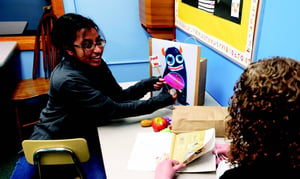
The Freedlander Speech and Hearing Clinic, located on the ground floor in Wishart Hall, functions as an outpatient clinic for the Wooster community. Under the supervision of licensed, certified professionals, student clinicians assess and treat communication disorders that impact speech, language, and/or hearing. Currently, the staff is composed of two professionals (Clinic Supervisor Cara Hammond, M.A., CCC-SLP; and Associate Professor Joan Furey, Ph.D., CCC-SLP).

Clinic Experience for Students

For students majoring in Communication Sciences and Disorders, the Freedlander Clinic serves another important function: Student clinicians gain hands-on clinical experience, which few undergraduate programs offer. Indeed, these experiential learning opportunities in the Freedlander Clinic enable students to apply what they are learning in their coursework and often serve as a source of ideas for I.S. research. Student clinicians enroll in the Speech and Language Clinic Practicum course for three semesters and work under the guidance of state-licensed and American Speech-Language-Hearing Association (ASHA) certified supervisors. In the fourth semester, students may continue in the Speech and Language Clinic Practicum course, or they may elect to enroll in the Audiology Clinic Practicum course.

Services

The clients served at the Clinic are of any age, from infants through older adults, and the types of disorders managed are equally varied. Referrals come from numerous sources, including area physicians, local schools, and the College faculty, staff, and student body, in addition to self-referrals from the Wooster community. Clients are seen during the academic year, and there are no fees for clients.

The Freedlander Clinic is equipped with audiologic test equipment, a sound-treated audiology test booth, and a variety of tests, assessment protocols, and therapy materials for assessment and intervention.

In sum, the Freedlander Clinic serves as a catalyst for service, education, and research. The Clinic not only affords students the opportunity for rich educational experiences, but also provides individuals of the surrounding community with much-needed services, at no cost, that may significantly improve their quality of life.