
Wooster students present research at coast-to-coast scientific meetings
Seven biochemistry & molecular biology students and four neuroscience students recently represented The College of Wooster at premiere scientific meetings, sharing original research and engaging with professional communities that shape the future of science.
Alongside Mark Snider, Robert E. Wilson Professor of Chemistry and Biochemistry & Molecular Biology, BCMB majors presented results of their research projects (from Independent Study and sophomore research) at the 2026 Annual Meeting of the American Society for Biochemistry and Molecular Biology in Washington, D.C. The following students presented this year: Jacob Enzman ’26, Charlie Cuttino ’26, Caley Sherrill ’26, Faiyaz Hasan ’26, Frederick Pytel ’27, Noah Lanyi-Lari ’27 (BCMB majors), and Aneesh Pant ’27 (BCMB and statistical & data sciences major). In addition, Lanyi-Lari was chosen to participate in the national ASBMB undergraduate research poster competition.
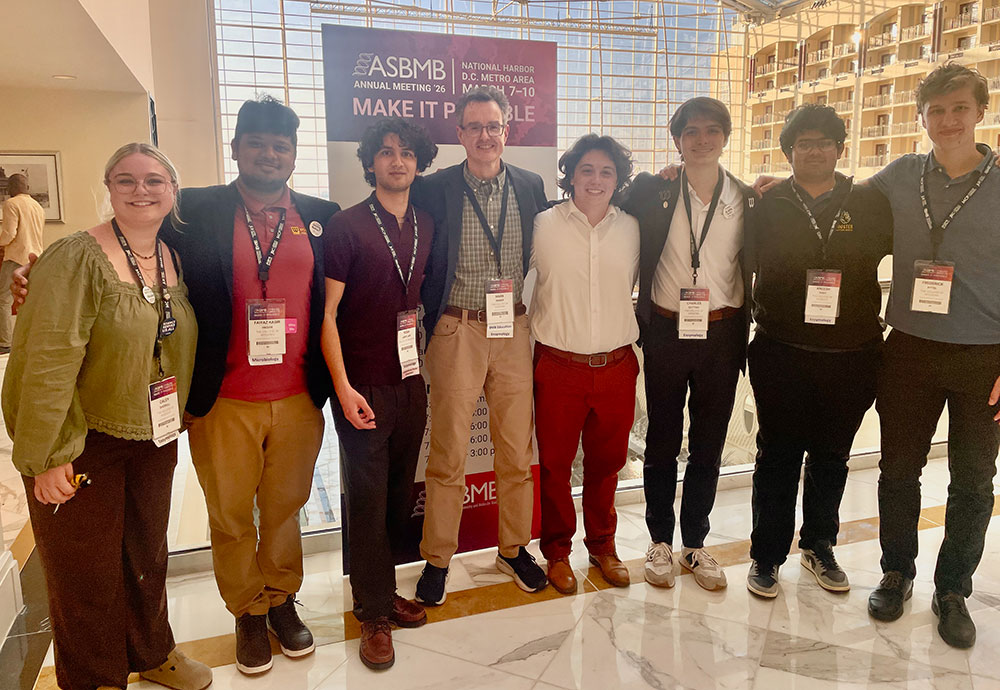
Professor Mark Snider and seven Wooster students attended the 2026 Annual Meeting of the American Society for Biochemistry and Molecular Biology in Washington, D.C
The College boasts a long history of strong representation and award-winning undergraduate research at the national ASBMB meeting and other national conferences, with Snider taking 24 research students to present posters in the past five years alone.
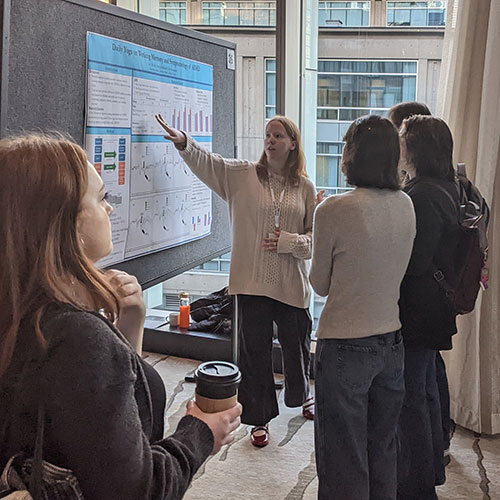
Meanwhile on the west coast, four students traveled to Vancouver, Canada for the Cognitive Neuroscience Society Annual Meeting. Accompanied by Grit Herzmann, associate professor of psychology and neuroscience, students Alexis Kulin ’26, Lilly Moody ’26 (neuroscience majors), Jacob Hankin ’26 (neuroscience and music major), and Hannah Reinicke ’26 (psychology and music major) attended or presented posters based on their I.S. research.
“I pre-select students who I think will have high-quality projects by spring,” explained Herzmann. “It’s a mix of having a publication-eligible project, which is a higher level than what I typically impose on I.S. projects and preparedness of the student to put in the extra work.” She said the typical March or April timing of the CNS meeting is ideal because it allows for students to complete intensive work on I.S. and showcase it on an international stage.
Both Herzmann and Snider said their undergraduates are often mistaken for graduate students because of the depth and clarity of their presentations. “Our students’ engagement in research is unique because they design much of the project themselves and thus have great ownership and understanding. That level of scholarship shines when they present their novel discoveries to the scientific communities,” said Snider.
To be considered for this opportunity, Snider’s students had to have their research results by November to write and submit an abstract summary later that month. ASBMB chose the abstracts for the presentations, and one student was chosen to participate in the undergraduate research poster competition.
Students funded the trip through a variety of sources including Wooster’s Center for Advising, Planning, and Experiential Learning (APEX), the STEM Success Initiative (SSI), or endowed departmental funds.
“Attending research-focused conferences allows students to dip their toes into the water of graduate school and research as a profession,” noted Herzmann, adding that students felt empowered by connecting with leading scientists and sales representatives.
For Noah Lanyi-Lari ’27, one of the most valuable parts of the experience was discussing his work with researchers who approach similar problems from different angles, especially those working in structural biology and molecular dynamics. “Those conversations gave me new perspectives on how to interpret and extend my results,” said Lanyi-Lari. “Presenting my research helped me develop my ability to communicate complex ideas clearly, which is an essential skill in both graduate study and scientific careers.” To boost those skills further this summer, Lanyi-Lari plans to participate in a Research Experience for Undergraduates (REU) at the University of Kansas, working in structural biology and gaining experience with techniques like X-ray crystallography.
Featured image: Lilly Moody ’26, a neuroscience major was among the students presenting her research at the Cognitive Neuroscience Society Annual Meeting in Vancouver.
Posted in News on May 12, 2026.
Related Posts
Related Areas of Study
Neuroscience
Psychology, chemistry, philosophy, computer science, and other disciplines combine in the study of the nervous system
MajorChemistry
Access to labs, research opportunities, and small classes give chemistry majors lots of options after graduation.
Major MinorBiochemistry & Molecular Biology
Biology and Chemistry combine in an interdisciplinary program for students with a passion for molecular events.
Major