

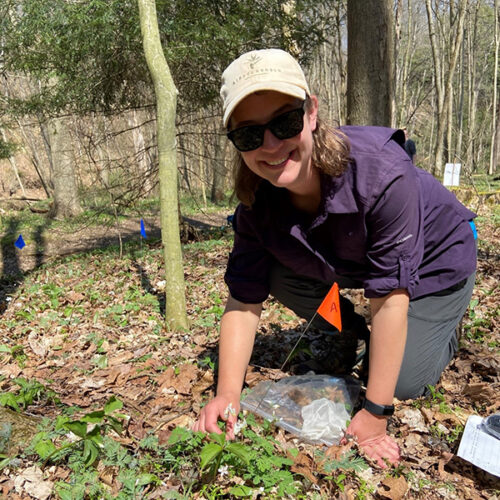




New Choose Ohio First scholarships to support STEM students at Wooster
Awarded by the Ohio Department of Higher Education, The College of Wooster will receive a grant of $135,000 to support STEM students between 2027 […]

The Environmental Studies Program at Wooster engages students with environmental issues both inside and outside the classroom, at both local and global levels. Resources available to students include a campus garden, visiting speakers, connections to local researchers and facilities at the Ohio Agricultural Research and Development Center, and opportunities to get involved in faculty research, campus sustainability initiatives, and internships both on and off campus. Recent students have worked with urban gardening initiatives in Cleveland, environmental education centers, environmental writing, and a variety of off-campus study options that expose them to environmental concerns and initiatives in other parts of the world.
Students majoring in Environmental Studies choose from four different pathways to give their interdisciplinary major a coherence and focus. Those pathways are:
Although pathways are focused around a central theme, students get the full breadth of an interdisciplinary program, by taking Environmental Studies courses and and cross-listed courses across all the academic divisions.
Awarded by the Ohio Department of Higher Education, The College of Wooster will receive a grant of $135,000 to support STEM students between 2027 […]
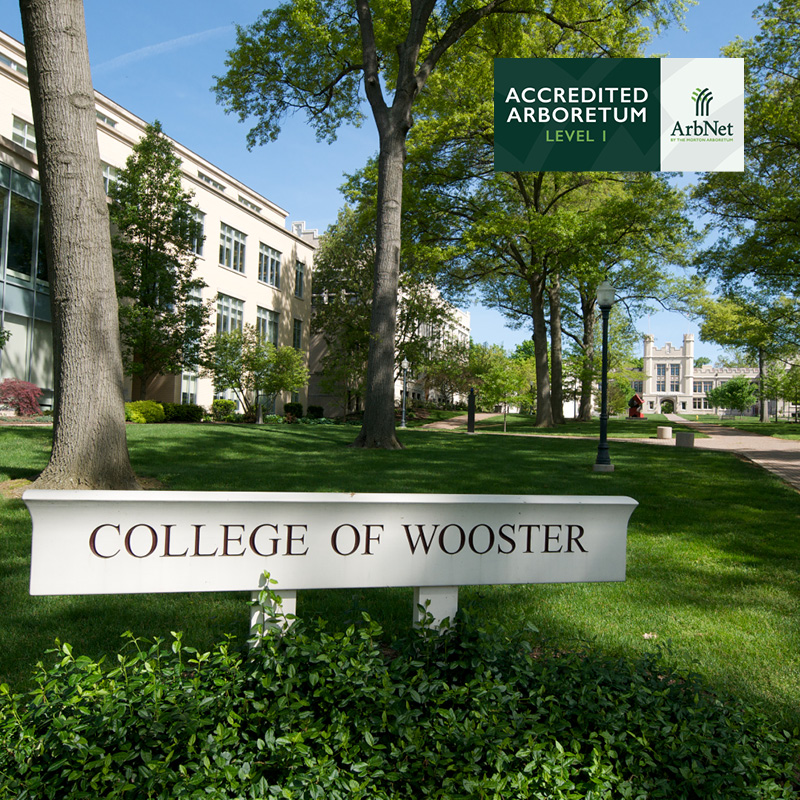
A seven-figure gift from The College of Wooster alumnus Paul Abbey ’73 and his wife, Constance Norweb Abbey, has established the campus-wide Abbey Arboretum […]

The summer before her senior year, Nurain Amier ’26, a biology and Chinese studies major with minors in environmental studies and music at The […]
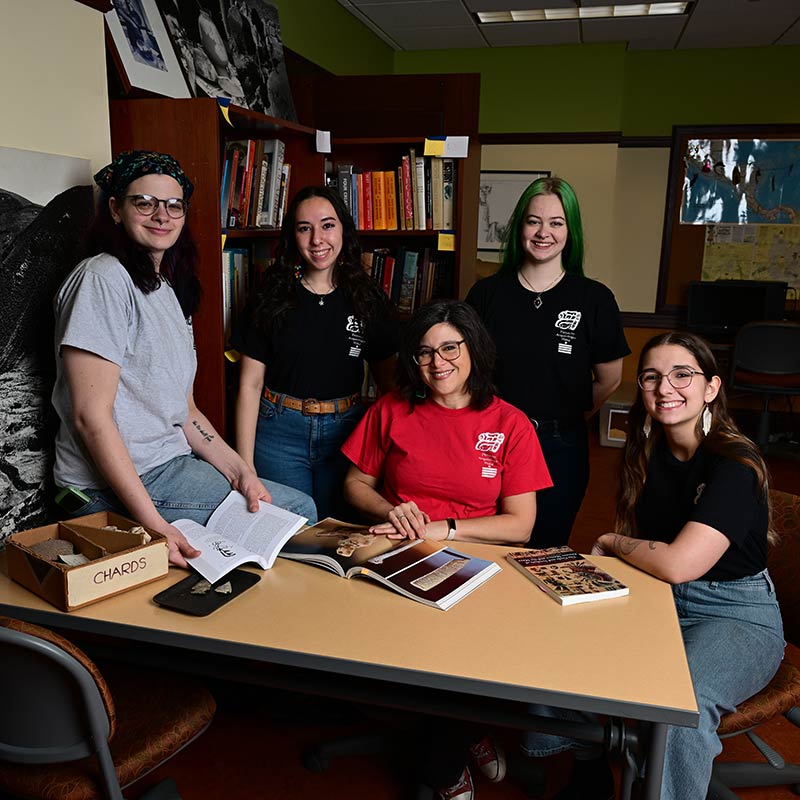
In more than 20 years of archaeological research with Proyecto Arqueológico Waka’ (PAW), Olivia Navarro-Farr, professor of anthropology and archaeology and chair of archaeology […]
Environmental Studies majors become knowledgeable about core scientific concepts that are relevant to the environment; able to understand different ways of assessing the value of the natural environment; comfortable with different means of examining and communicating about the environment; and familiar with the ways in which social institutions contribute to environmental problems and potential solutions to those problems. They should also understand their own roles within the human-environment relationship.
To complete a major, students choose 13 courses that span environmental science, economics, communications, psychology, various humanities options, and other science courses. All students at The College of Wooster complete two semesters of independent study under the guidance of a faculty mentor and their research is used to build a thesis delivered in spring semester of their senior year.
View Courses
Environmental Studies minors are knowledgeable about core scientific concepts that allow them to understand ecological processes and change. They are able to understand different ways of assessing the value of the natural environment and be comfortable with different means of examining and communicating about the environment; and familiar with the ways in which social institutions contribute to environmental problems and may be utilized for solutions to those problems. They should also understand their own roles as actors within the human-environment relationship. The environmental studies minor complements a major in a traditional department so that students combine a detailed understanding of the knowledge and methods within a discipline with a focus on a particular topic.
View Courses
All students at The College of Wooster complete independent study on a topic of their choice under the guidance of a faculty mentor. The research becomes the basis of a thesis delivered in spring semester of each student’s senior year.
| Student | Year | I.S. Title | Major 1 | Major 2 | Advisor |
|---|---|---|---|---|---|
| Please search to view results | |||||
In more than 20 years of archaeological research with Proyecto Arqueológico Waka’ (PAW), Olivia Navarro-Farr, professor of anthropology and archaeology and chair of archaeology […]
A 2023 TREK trip to Costa Rica with faculty and students from The College of Wooster inspired economics major Trinity Harmon ’24 to investigate […]

In 2018, 12 years after a century-old industrial site closed, the city of Rittman decided to turn it into the William J. Robertson Nature […]

Jen Mynard ’23 believes making sustainability more accessible to everyone will be “the issue of the coming century as climate change threatens all.” The […]
Environmental Studies majors have access to internships and hand-on learning in college that leads to job offers and career paths after graduation.

Amy Melena ’16 came to The College of Wooster with no knowledge or interest in farming, but she did know she wanted to do […]

Lauren Vargo ’13 came to The College of Wooster because she wanted the chance to take a wide variety of classes to figure out […]
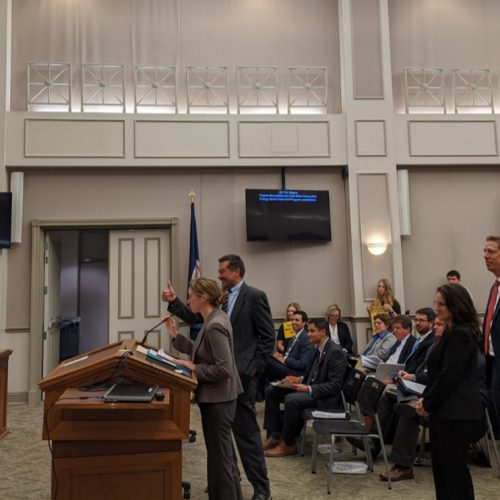
Chelsea Barnes ’07 strikes the balance between working with her community to promote solar energy and creating environmental policy

Dekila Chungyalpa ’98 incorporates interests and skills she developed at Wooster into a lifelong commitment to environmentalism.