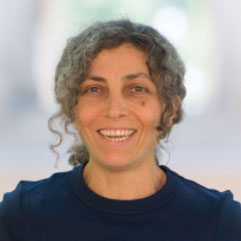
Mareike Herrmann
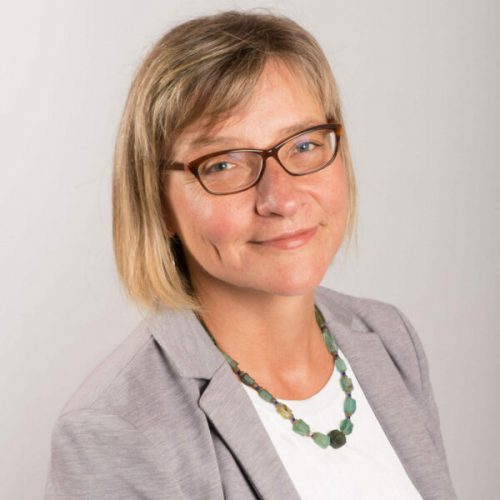
A native of Northern Germany, Herrmann’s primary areas of interest are 19th and 20th century German literature, film, cultural studies, and women’s studies.
A specialist in American philosophy, political philosophy, and ethics, McBride works with students to better understand decolonial philosophy, the ethics of food, and environmental philosophy.
Using techniques from animal behavior, ecology, evolutionary biology, biochemistry, molecular biology, and bioinformatics, Sirot’s current area of research seeks to understand seminal fluid proteins, which are proteins synthesized by males that have functions within mated females in a wide range of species, including humans.
Rapport’s scholarship focuses on American religious history, including religious movements in America and metaphysical religions. He also teaches on the intersection of religion with race, gender, and class.
The author of several books focused on foreign policy analysis and international security, Lantis is a recipient of the Distinguished Teacher-Scholar Award from the International Studies Association for his active teaching innovations.
Tian’s research is focused on applied econometrics and applied microeconomics in relation to industry organization, the environment, and financial institutions. She works with students in areas such as corporate finance, portfolio theory, and capital markets.
With experience as a software engineer, Guarnera introduces students to algorithms and programming. Outside of class, she researches and has published work in graph theory and algorithmic applications.
With experience as a city planner in Kansas and Theran, Iran, Goharipour’s research examines visual representation of cities, including in cinema.
Shaya researches the cultural history of France in the late 19th and early 20th century. He also teaches on film history and documentary filmmaking and founded of the Wooster Digital History Project.
Having completed her doctoral research on the ability of citizens to use political representatives to lobby for better provision, Haider’s research studies the privatization of public goods, primarily in Karachi, Pakistan.
Weber’s research has focused on language, discourse, and argumentation in political thinking. She specializes in the influence of language philosophers on political understanding and judgement.
Recipient of multiple research and teaching honors, Professor of Communication Studies Denise Bostdorff analyzes political rhetoric related to issues of crisis, war and peace, and race.
Eager’s research includes early modern British literature and material culture. Her teaching extends from medieval studies to contemporary poetry, environmental writing, and anti-racism.
Craven is an interdisciplinary published scholar, teaching courses in areas of reproduction politics, ethnographic research, transnational feminisms, queer lives, and feminist teaching and learning.
An expert in macroeconomics, Moledina is a widely published author of articles on trade, agriculture, growth, and monetary economics. He is also the co-founder of Wooster’s Social Entrepreneurship program, an experiential learning opportunity for students.
Neptune, a 2005 College of Wooster graduate, began her teaching career in Los Angeles and contributed to the curriculum content of the Nick Jr. show “Wallykazam!”
Studying free-living eastern bluebirds and captive zebra finches, Lynn studies hormone-behavior interactions by studying stress hormone endocrinology from both a mechanistic standpoint and an evolutionary standpoint.
Working with undergraduate students, Herzmann studies memory and cognition relating to facial recognition. Herzmann is especially interested in “the other race effect,” a phenomenon that describes the increased facial recognition of people of the same race as oneself.
Fraga works with students to study how proteins can be used to help address societal and economic problems including, environmental clean-up or the industrial synthesis of valuable compounds.
Using Drosophila melanogaster (the fruit fly), Kelly investigates the function of the “fly ZC3H14” gene (called Nab2 in flies), in nervous system development and function, especially as it relates to intellectual disability and IQ.